
Patience in the Shadow of Ba Sing Se, Depression in the Shadow of Youth
September 05, 2025
“Where are we going to go? We’re enemies of the Earth Kingdom and fugitives from the Fire Nation.” ~Zuko
Spring of 2006, I’m a sophomore in High School and believe it or not, I meet my wife this year. We’ll get back to that later though, for now I need to finish setting the scene—I’m in my second year at a new school in a new state and I have made zero friends. It’s spring and the Illinois snow has begun to thaw. More importantly, however, the new season of Avatar is about to air and, little do I know at this moment, but it will end up being my favorite season.
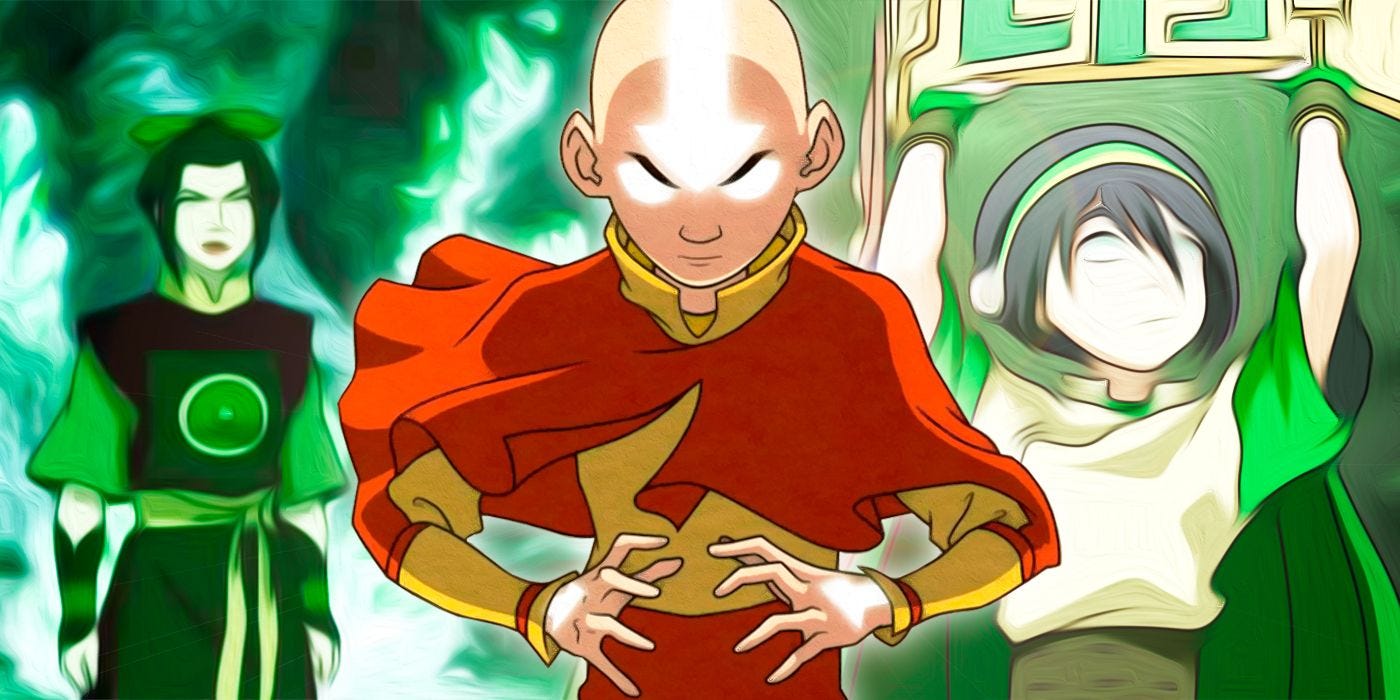
Now, if Book 1 was about Zuko and his desperate quest to prove himself, then Book 2, for me, belongs to Iroh. Gentle, compassionate, fiercely loyal, he embodies so much of what I’ve spent my life trying to grow into. And yet, like Iroh himself would say, striving doesn’t always mean succeeding. By the end of this reflection, I’ll admit that I failed in more ways than I’d like. But for now, let’s linger on what makes Book 2: Earth such a perfect lesson in patience and understanding. Aang’s chaotic journey across the Earth Kingdom is as much about grounding as it is about struggle, and in Iroh’s quiet presence throughout, I saw a mirror of my own hopes for the person I wanted to become.
In this season, Iroh is constantly tested—his loyalty to his brother, to his niece, to his homeland. But the greatest test comes in his loyalty to Zuko himself: a boy who, with every stubborn act, drives them further apart, never realizing his uncle is the only anchor he has. You can see the cracks forming between them even here, in Ba Sing Se’s shadow and the secrecy of Lake Laogai, where love and loyalty start to bend under the weight of Zuko’s obsession. That’s where my exploration lies. So, join me as I walk through Book 2: Earth, the season as I felt it—an Iroh wannabe trapped in a Zuko body. And along the way, we’ll even touch on the glimpses that Wizards has already given us of Iroh in Magic’s first look at the Avatar set.
The Lesson of Waiting
Water wanted us to ask, “Who am I?” but Earth asks: “What does it mean to stay rooted?”
Book 2: Earth is a season of waiting. Aang searches and waits to find his earthbending teacher. While Toph, unknowingly, waits to be recognized for her own strength rather than only for her heritage or even her blindness. Zuko spends most of the season waiting for some chance—any chance—to restore his identity. And through it all, Iroh waits alongside him, patient in a way that almost feels alien compared to the chaos swirling around them.
That waiting became the theme of my own sophomore year. I wasn’t necessarily hated anymore, not exactly—but I wasn’t seen either. People would walk past me in the hallways like I was wallpaper. At first, I loved this. That invisibility felt like relief after a year of bullying. The longer it stretched on, however, the heavier it felt. This was a hard lesson for me to learn but, being ignored isn’t the same as being safe—it’s just another way of being erased. And so, I waited too. I told myself that if I could just endure the days, the thaw would come. That I’d be found by someone, and they would show me who I was. Similar to Zuko in this season, I couldn’t trust myself.
The Jasmine Dragon
And then came a light: The Jasmine Dragon.
Iroh opening his teashop is one of the warmest, most quietly radical moments in the series. Here’s a man who once commanded armies at Ba Sing Se, who could have lived a life defined by war and conquest—and instead, he chooses tea.
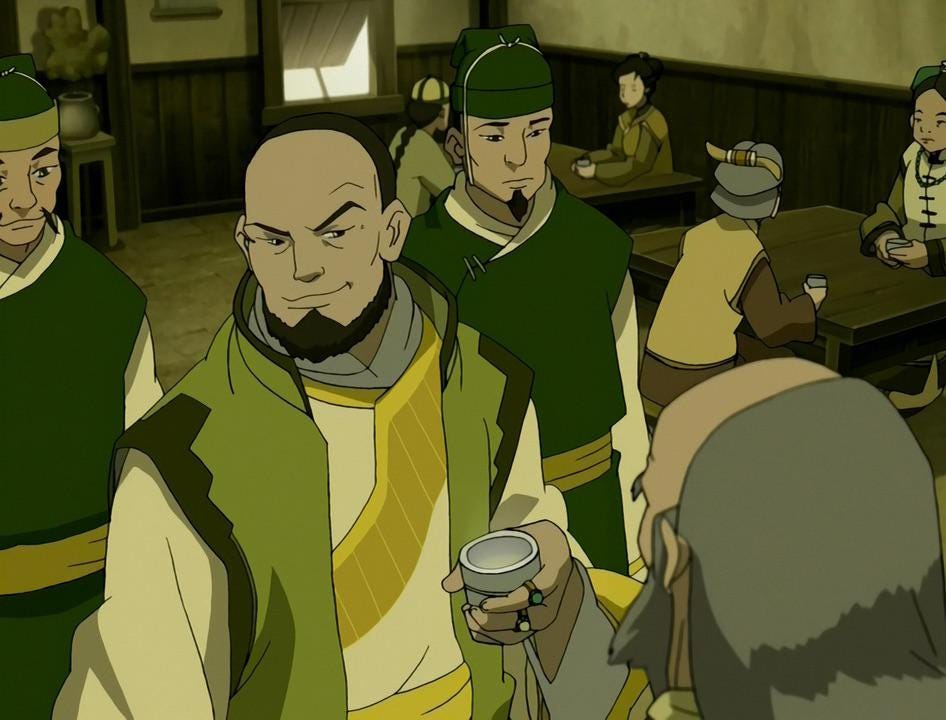
He chooses to care. He chooses to build something gentle in the shadow of the city that once defeated him. Best of all, he gets to do so with Zuko by his side. We can see how much this means to Iroh, he feels like he did it. He finally found the Zuko he’d always known was there. I still remember how much I loved the awkward mannerisms, the spilled tea, the frustration in the face of a life too calm for a boiling prince. Zuko was a reflection of my own struggles as I faced the silence in school.
That spring, I even picked up my first part-time job at a restaurant called FIBs.

I’d also learn from the people in my school that FIBs was an acronym for “Fucking Illinois Bastards” and was often used by the folks 5 minutes north across the Wisconsin border. I wasn’t graceful as a busboy. I spilled drinks, I forgot about tables that needed cleaning, I had no knack for conversation with coworkers. But I learned a lot about pressure, that having a job to distract me from school and homelife carried a kind of power. It was a connection to the actual world. Small, fleeting, but real. And I think some part of me was trying to channel Iroh in those moments: to offer comfort in a world that often felt unbearably cold.
The Jasmine Dragon wasn’t just a shop, right? To Iroh it was a philosophy, to be honest I always saw it as an apology from a man that saw beauty where his family saw conquest. Iroh saw the people within the walls where Ozai only saw barriers to keep him out. For his many faults, I always felt like this time period was the closest Zuko ever got to having a father, no, to having a dad.
Tales of Ba Sing Se: Small Stories, Heavy Hearts
Tales of Ba Sing Se is where the show pauses and breathes. It’s quiet, fragmented, almost dreamlike—a collection of moments that don’t advance the plot but instead reveal the texture of life in the city. And tucked inside those fragments is the one that still undoes me every time: The Tale of Iroh.
Everything in this episode is on the surface, it’s simple. Iroh wanders the city, helping strangers—fixing a boy’s stance, soothing a crying child, calming a mugger with tea and wisdom instead of violence.
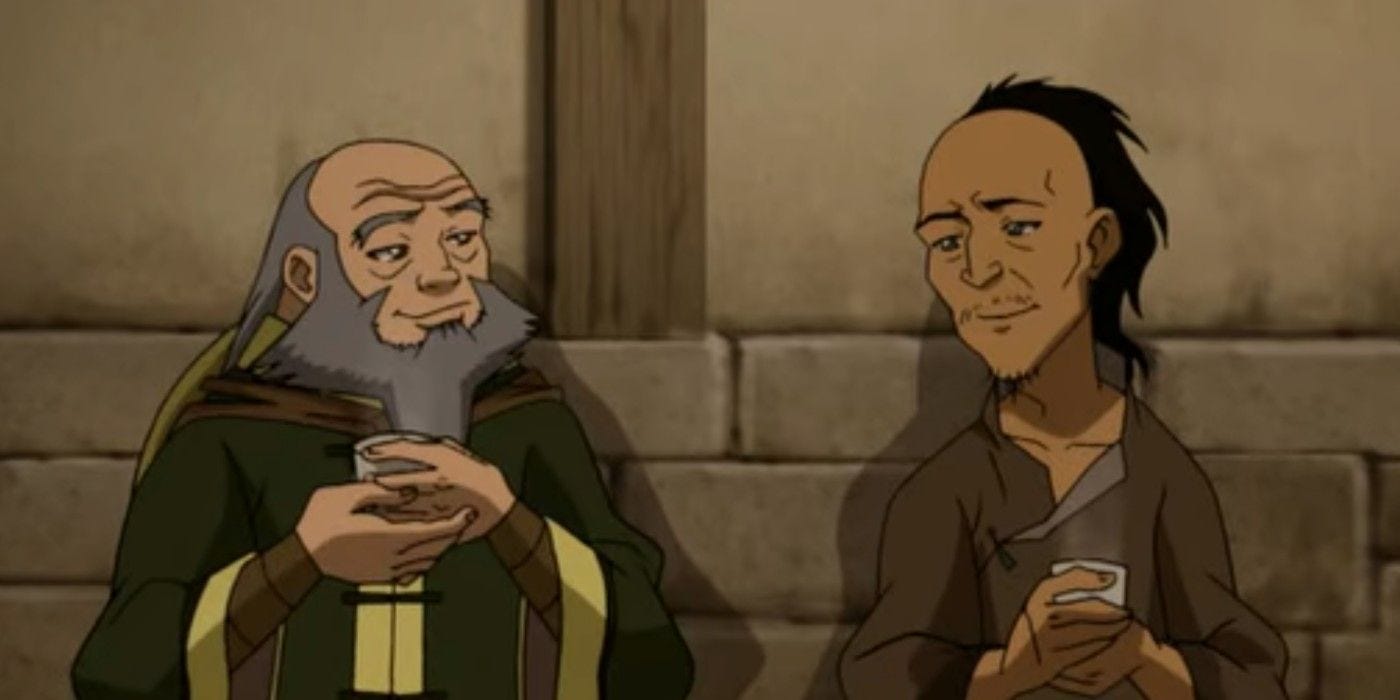
It’s Iroh, concentrated down into his purest form: kindness given freely, with no expectation of return. Watching it in 2006, it felt like a blueprint for the man I wanted to be, even if I kept tripping over my own anger and insecurity.
And then comes the gut punch.
“Leaves from the vine, falling so slow. Brave little soldier boy comes marching home.”
Iroh climbs the hill; we see the walls of the city on the horizon behind him.
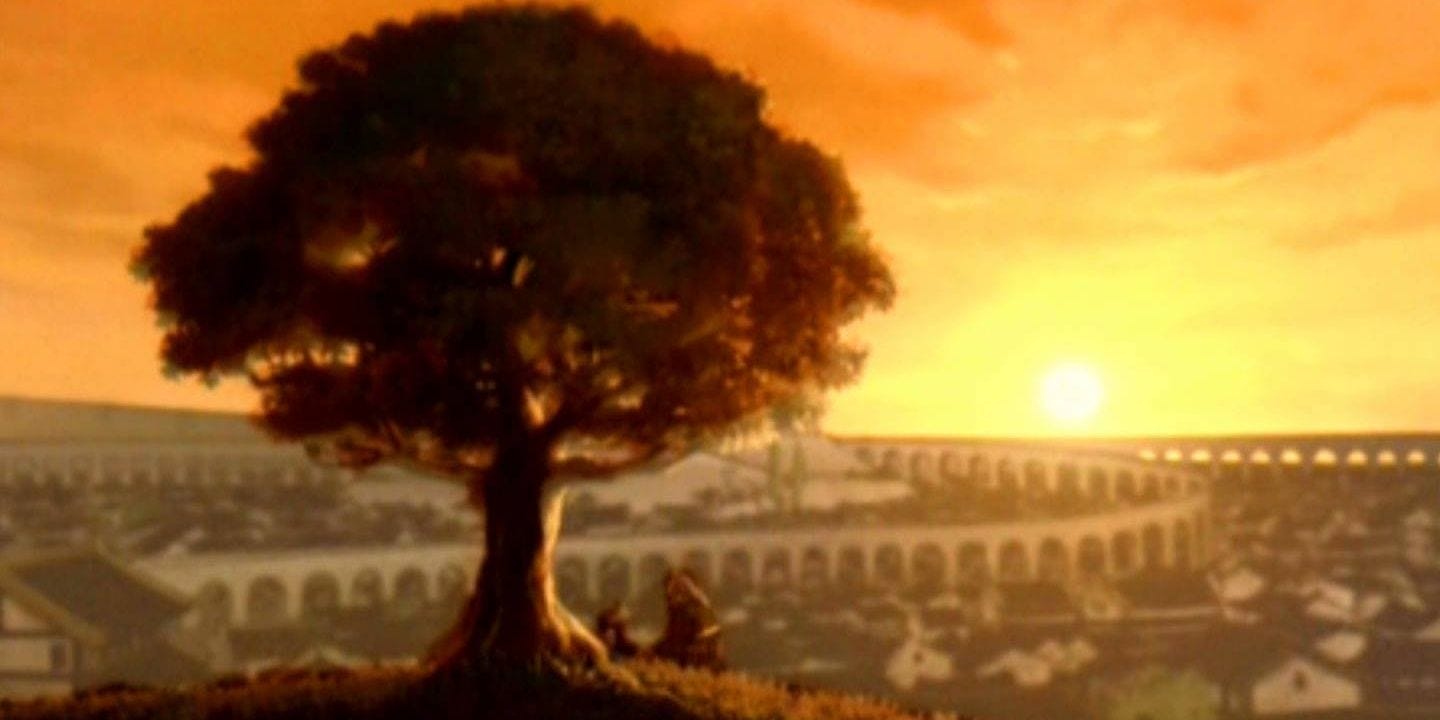
He lays out the picnic. He sings those words to the son he lost. “If only I could have helped you.” I cried incredibly easy back then, still do, and that moment broke me. It still does. Because, I think, at that moment, Iroh wasn’t a cartoon character to me. He was a grieving father, a man who carried failure and regret in his bones, but who chose to keep loving anyway. You find yourself understanding why he treats Zuko with such patience and love. You understand that Zuko is his son now. That he can succeed where Ozai had failed.
That’s the part that stays with me: he doesn’t close himself off after losing Lu Ten. He doesn’t harden into bitterness. He opens himself wider, pours more love into the world, not less. And that lesson hit me harder than any duel or destiny speech: that loss doesn’t have to calcify you. It can soften you, if you let it. That he can save Zuko from succumbing to the same fate as Lu Ten.
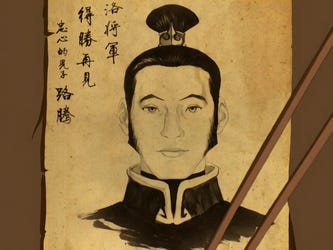
In my own life, though, I wasn’t there yet. I was still learning how to be patient, how to open up to people instead of shutting down. Like Zuko in the tea shop—unable to discern between suspicion and affection—I assumed the worst in people because that’s all I had seen the years prior. But Iroh’s little story in Tales of Ba Sing Se planted the seed. And maybe that’s the point of that episode—it shows us that the small stories matter. The way you treat a stranger, the way you carry grief, the way you choose to sing even when your voice cracks. Those are the choices that shape who you really are.
That’s probably why Lake Laogai lands so hard right after. Because if Tales of Ba Sing Se shows us the gentleness Iroh embodies, then Lake Laogai shows us just how fragile that gentleness can feel when love is pushed, when it’s strained to its breaking point.
Lake Laogai: Love Under Strain
The Dai Li’s corruption, Jet’s unraveling, the suffocating paranoia of Ba Sing Se—it’s one of the darkest turns in Avatar.
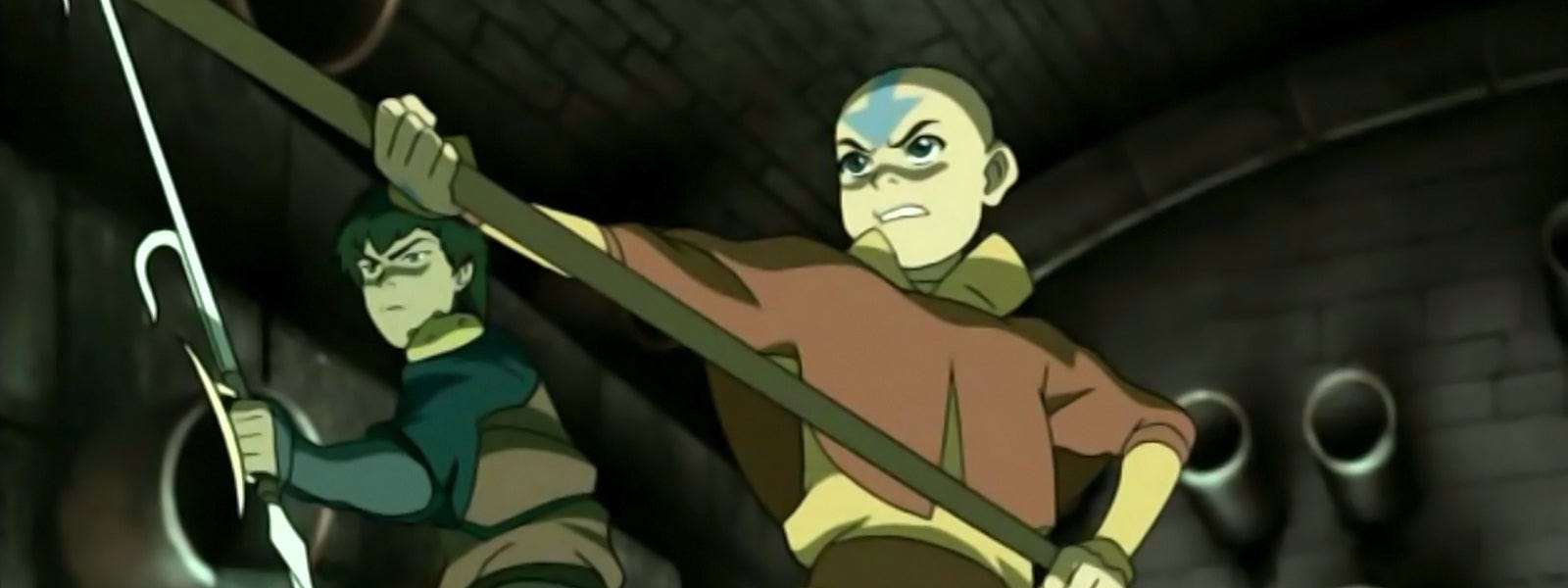
And in the middle of it, Zuko teeters on the edge. Masked as the Blue Spirit, he lashes out, consumed by obsession, unable to see the love that’s been beside him all along. Even after he is shown the potential life in the upper circle with the Jasmine Dragon, he still chases his past. Unable to let go of the pain and anger he’d known for so long.
I wanted to be patient and kind, grounded like Iroh. But inside, I was still Zuko—angry, restless, unable to see that the people who cared about me weren’t my enemies. See, depression is brutal, it twists love into something unrecognizable. It makes you push away the very anchors you need most, and Zuko was depressed. It isn’t easy to give up 16 years of your life, to abandon everything you’d known.
You know, it wasn’t until right now when I googled Zuko’s age, that I realized we were both the same age in this Book, how funny.
Anyway, Lake Laogai reminds me that love is not easy. Too often, it bends under the weight of secrecy and obsession. Even faced with this, Iroh’s loyalty to Zuko never breaks. The moment when Zuko discovers Appa beneath the lake will always be one of my favorite Iroh moments.
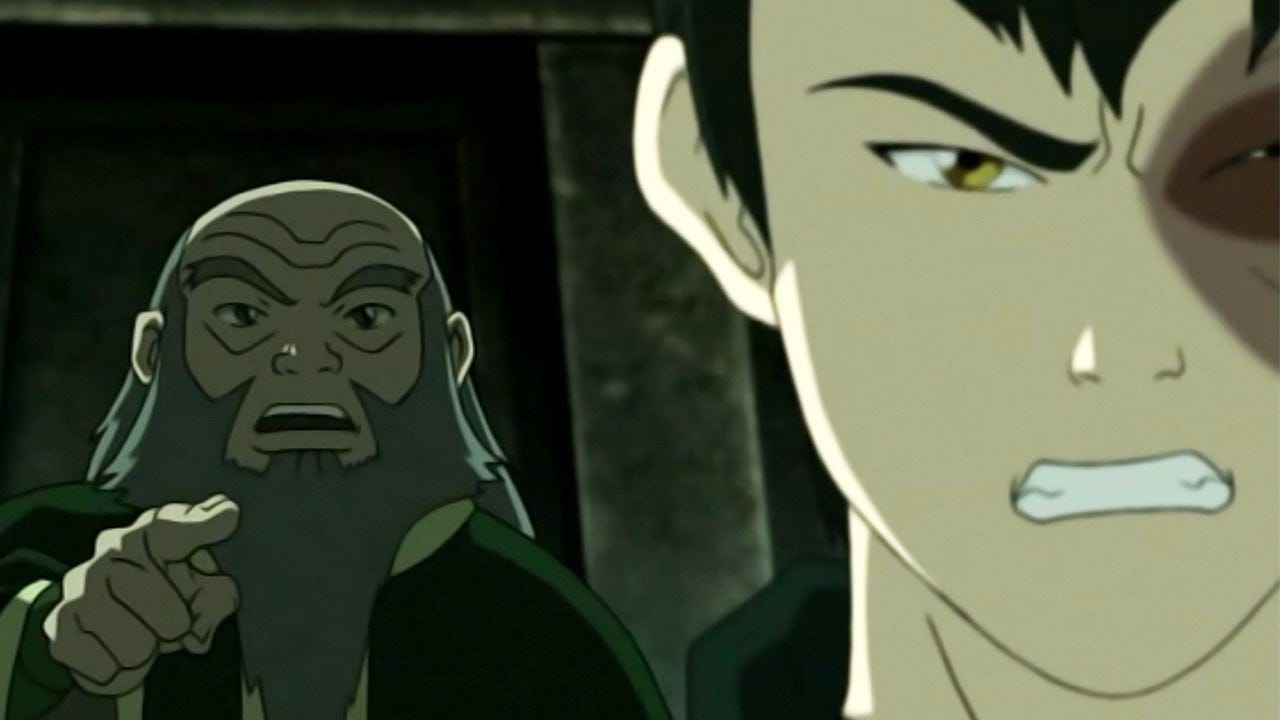
The pain in his voice as he tries to coax his nephew back from the edge. That quiet truth—that love can stretch and strain and still hold—was a lesson I needed, even if I didn’t yet have the courage to live it.
The Crossroads of Destiny
The Siege of the North was the pinnacle of Book 1, and it felt like drowning, The Crossroads of Destiny, on the other hand, feels like suffocating in silence.
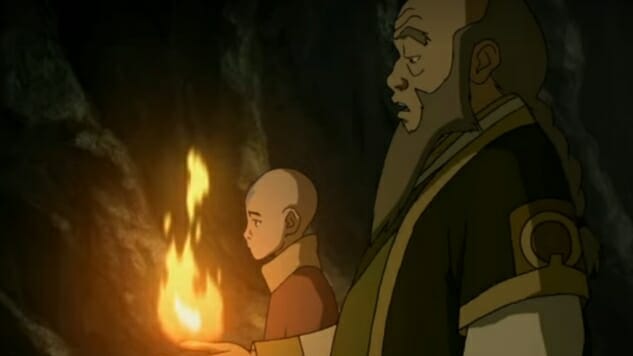
The crystal catacombs glow with eerie beauty, but every shard of light hides betrayal. Azula’s whispers are poison. “Azula always lies” afterall. Katara’s trust is shattered. And Zuko—the boy who had been inching, painfully, toward something better—makes the choice that breaks us all. He turns his back on Iroh.
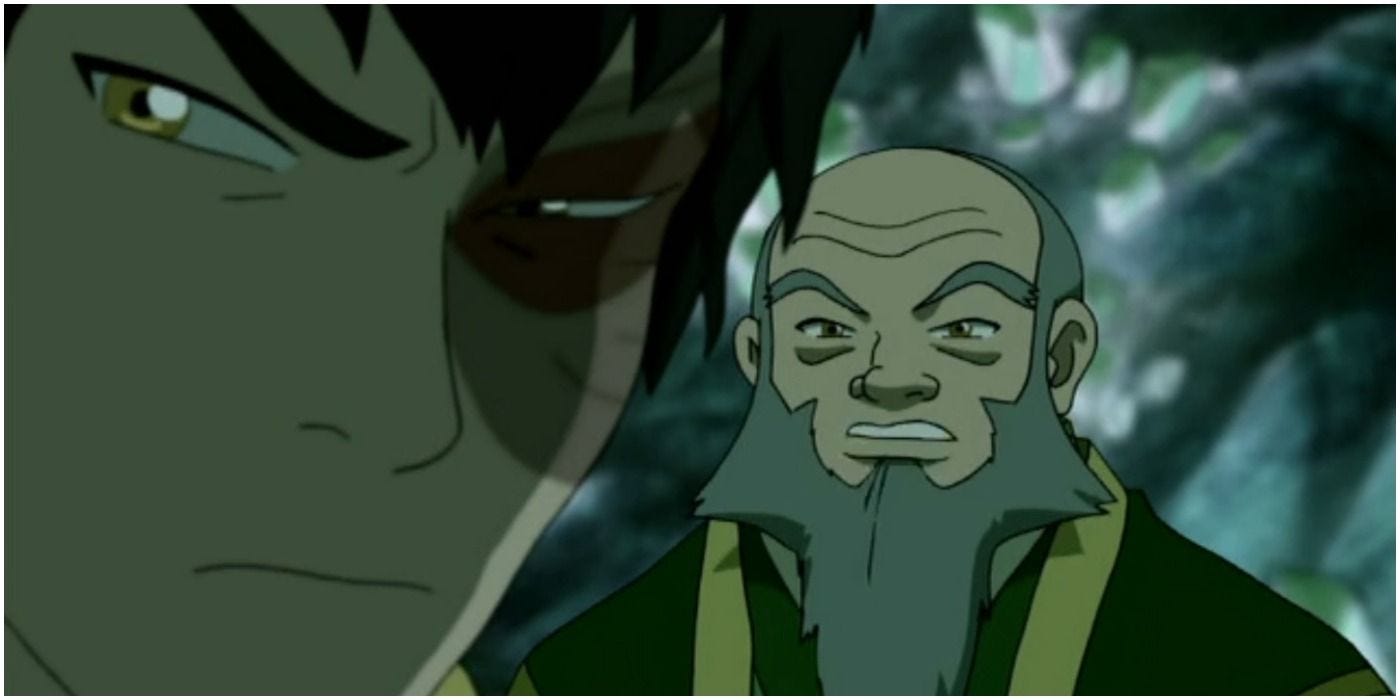
That moment gutted me, and I genuinely don’t think I’ve emotionally recovered from the episode even now. The image of Iroh, encased in crystal—betrayed, watching his nephew step into the same cycle of violence he had tried so hard to prevent—it seared itself into my memory. His face isn’t angry. Hell, it isn’t even shocked. It’s heartbreak, pure and quiet. The kind of heartbreak that’s only possible when love has been poured, again and again, into someone who refuses to accept it. Disappointment manifest.
Back in 2006, I wasn’t ready to see that I was doing the same thing—pushing away the people who cared, clinging to the approval of those who never would. Watching Zuko’s choice was like holding up a mirror I didn’t want to look into. I saw Iroh’s look of disappointment everywhere around me, begging me to reach out for help.
Here’s the unlikely miracle of this episode: it doesn’t end with Zuko’s fall. It ends with Iroh’s refusal to give up. Even betrayed, even imprisoned, he never withdraws his love. He waits. Patient as earth itself.
That’s what saved me, too. Not my own strength, but the patience of people who didn’t walk away when I failed them. The friends I would eventually make, the woman I would one day marry, the mentors who offered kindness I didn’t know how to accept. They waited, even when I wasn’t ready to choose them.
Wish You Could Brew Like Iroh?
As we draw ever closer to the release of Magic’s Avatar set, it releases the weekend of my 35th birthday by the way, I can’t help but search for these moments in the cards. The moments that I can see clear as day when I close my eyes. That’s expected though since it is a set that thrives on nostalgia.
I went over my thoughts on Zuko’s treatments in my Book 1 article, so for Book 2 I want to look at the few Iroh cards we’ve gotten to see so far. Spoiler alert, there are far too few.
First up: new cards.
Iroh, Firebending Instructor.
Here we get to see the Episode 1 Iroh that we fell in love with.
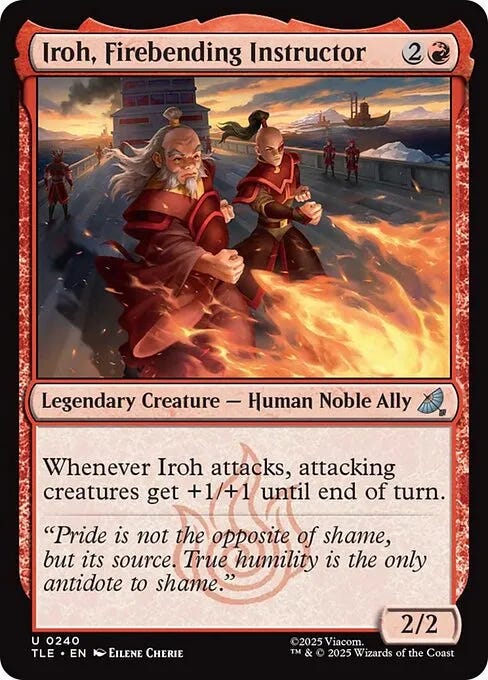
His ability bolsters the power of those around him and that is beautiful. It’s an excellent example of what he stood for, and it’s simple and minimal, just like him. The flavor text comes from the episode Bitter Work and reads “Pride is not the opposite of shame, but its source. True humility is the only antidote to shame. “
That’s it. As of right now that is the only Iroh card we’ve been shown. How heartbreaking is that? Now, I do believe we’ll get more, we have to, as we get to preview season next month. But until then this is the only Iroh I can brew with. Though we did get another new card that at least features Iroh heavily.
Path to Redemption.
In this card we see Iroh in two stages of his life.
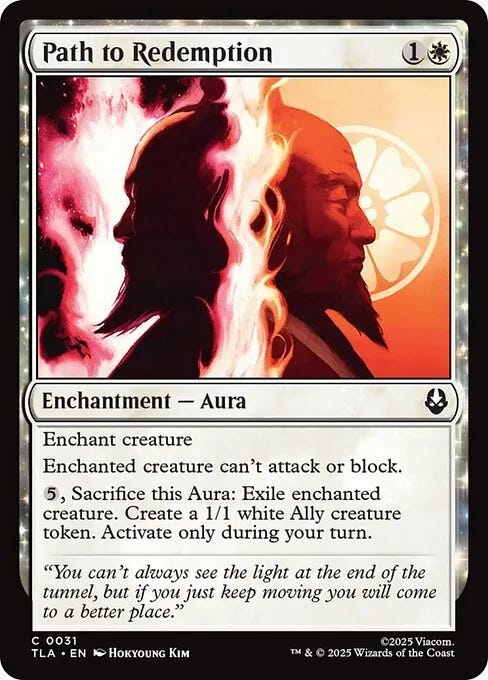
We see The Dragon of the West on the left. The Iroh that laid siege to Ba Sing Se, that served as General in the Fire Nation armies. We see the Iroh that still has a son to hug and cherish. Then on the right we have our Iroh now. Secret member of The White Lotus, owner and operator of the Jasmine Dragon. We have the redeemed, the man that has loved and lost more than we could ever fathom yet keeps on moving forward.
The flavor text here comes from the episode The Guru/Crossroads of Destiny and reads “You can’t always see the light at the end of the tunnel, but if you just keep moving you will come to a better place.”
Reflections in Stone
Book Two: Earth isn’t triumphant. It’s not neat or clean. It’s jagged, heavy, and at times unbearably quiet. Where Water felt like the crash of waves, Earth feels like weight pressing down—sometimes grounding, sometimes suffocating. It’s a season about waiting, about being tested, about learning that love doesn’t always look the way you want it to. And most of all, it’s about failure—the kind that hurts, the kind that lingers, but also the kind that teaches.
Looking back, I can see that I wasn’t living like Iroh in 2006. I wanted to be patient and kind, but I was still too much like Zuko, flailing at shadows, blind to the anchors right in front of me. But that doesn’t mean the striving was wasted. Because just like Iroh never stopped loving Zuko—even when the boy betrayed him—I’ve come to realize that failure doesn’t erase the lesson. It just means you pick it back up tomorrow.
That’s what Book Two gave me. A mirror. A reminder that love can bend and not break. That patience can hold even when trust falters. That grief can soften instead of harden, if you let it. And that sometimes, being rooted doesn’t mean you never move—it means you hold steady long enough to grow.
So when I think about the cards we’ve seen so far, about Iroh’s gentle wisdom rendered in cardboard, I feel a strange kind of gratitude. Not just nostalgia, though there’s plenty of that, but gratitude for the reminder that these stories I clung to at 16 are still teaching me now at 34.
Because maybe that’s the real point of Earth: not that we always succeed, but that we keep trying to. That even in our failures, we can find patience, humility, and a better way forward.
And like Iroh said, if you just keep moving, you’ll come to a better place.
 The Ravnican Reading Nook
Leave a comment