
Charting the Cosmos in Edge of Eternities
“My God, it’s full of stars.”
— 2001: A Space Odyssey
There is something profoundly humbling about the vastness of space. Not simply its scale, but its silence—its indifference. In classic science fiction literature, from Arthur C. Clarke’s 2001: A Space Odyssey to Stanisław Lem’s Solaris, space is rarely just a backdrop for adventure. It is a force in itself: unknowable, unfeeling, and vast beyond comprehension. These stories turn space into a mirror, reflecting back the frailty, wonder, and terror of the human experience.
With Magic: The Gathering’s upcoming set Edge of Eternities, we find ourselves on the cusp of a world—or many worlds—that may echo those same themes. The name alone evokes a boundary, a final threshold beyond which nothing is certain. It offers the potential to explore the same emotional terrain as classic sci-fi: the awe of discovery, the quiet terror of isolation, and the creeping realization that some questions may never be answered.
This article will explore how literary portrayals of space travel balance wonder and dread, and how Edge of Eternities might carry that legacy forward—inviting players not just into battle, but into the beautiful, terrifying silence of the unknown.
To understand how Edge of Eternities might tap into the emotional and narrative weight of great science fiction, we must first look at two cornerstone works that define the genre’s philosophical approach to space: Arthur C. Clarke’s 2001: A Space Odyssey and Stanisław Lem’s Solaris. Both stories place their characters at the precipice of the unknowable and use that confrontation to explore deep existential themes.
2001: A Space Odyssey — Awe in the Face of Evolution
In 2001: A Space Odyssey, Clarke (alongside Stanley Kubrick’s iconic film adaptation) begins with a mysterious black monolith influencing early human evolution, then launches readers into the cold silence of deep space. The story follows astronaut Dave Bowman and the HAL 9000 computer aboard the spaceship Discovery One, en route to Jupiter to investigate another monolith discovered buried on the moon
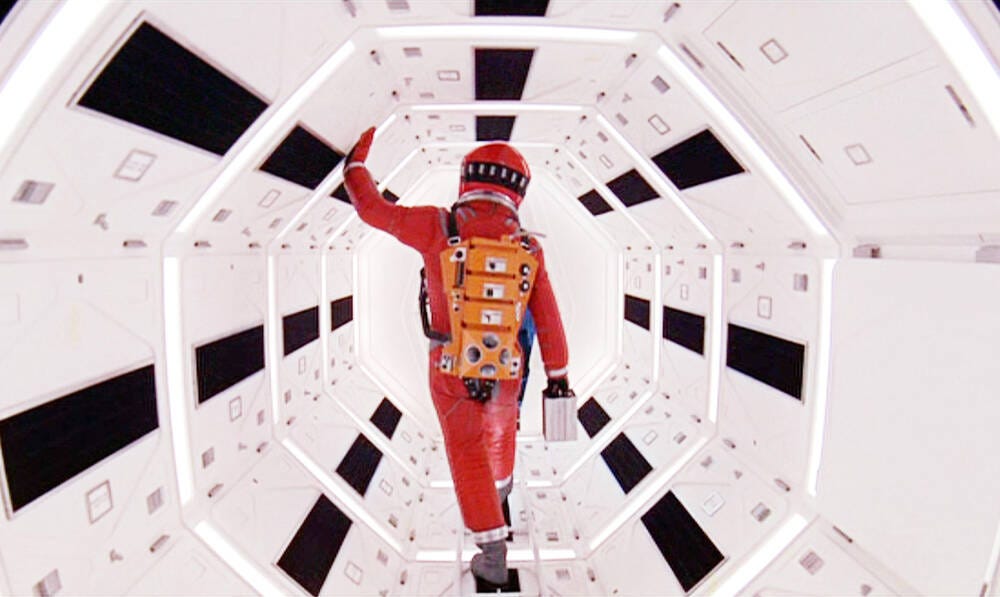
Much of 2001 is about the limits of human perception. The technology may be advanced, the characters logical and capable, but none of them truly grasp the scope of the forces at play. The monoliths are not only alien, but incomprehensible. This isn’t a story of defeating the unknown—it’s about surrendering to it. The climax, in which Bowman passes through a cosmic gateway and undergoes a surreal transformation into the “Star Child,” evokes the sublime: that blend of beauty and terror found when facing something so vast it escapes understanding.
Clarke’s use of awe is precise and deliberate. Long, quiet passages aboard the ship; HAL’s calm but chilling descent into paranoia; and the abstract final sequence all remind the reader that space is not simply a place, but a process—something ongoing, beyond the scope of human design or control. The fear comes not from monsters or war, but from the sheer scale of what we cannot comprehend.
Solaris — Fear in the Form of Memory
If 2001 uses awe to unsettle, Solaris turns inward, mining fear from the mind rather than the stars. Lem’s novel centers on a space station orbiting the ocean planet Solaris, where scientists attempt to study its bizarre, seemingly sentient sea. But the planet defies their methods. Instead of offering data or communication, Solaris probes their subconscious, resurrecting physical manifestations of their deepest regrets and repressed traumas
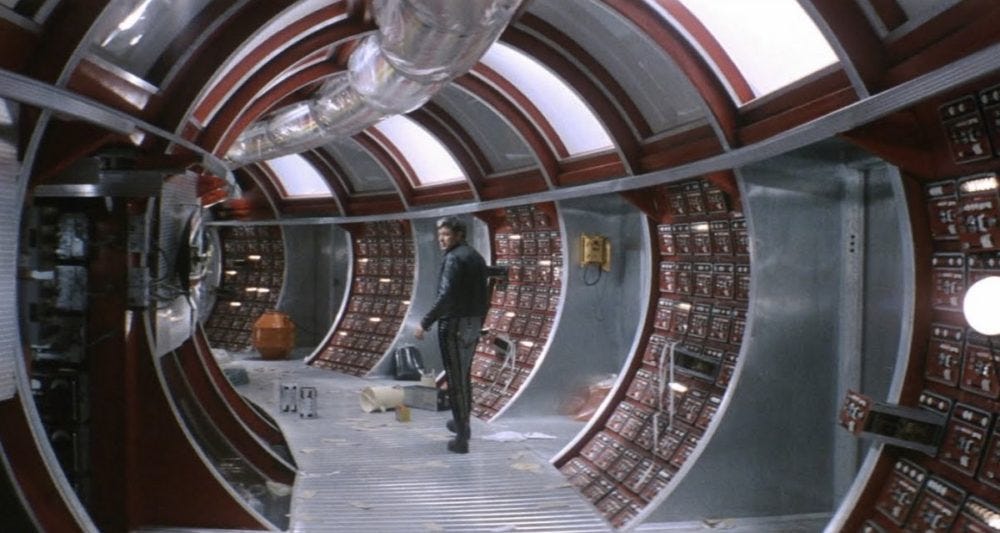
For psychologist Kris Kelvin, newly arrived on the station, this takes the form of Hari—his deceased lover—reborn from memory and trapped in a painful loop of existence neither of them fully understands. The awe in Solaris is the planet itself: a massive, living ocean that responds not to instruments but to emotion. The fear, meanwhile, lies in what it reveals. Unlike Clarke, who directs attention outward, Lem uses space to collapse the distance between observer and observed. It is not just the alien that terrifies—it’s the parts of ourselves we cannot escape, even light-years from home.
Lem resists the idea that everything can be understood. His prose oscillates between clinical description and surreal introspection, creating a dreamlike atmosphere where the unknown is not a puzzle to be solved, but a presence to be endured. Fear becomes personal, embodied not in alien creatures but in the sudden return of grief, guilt, and longing.
Both Clarke and Lem craft stories that don’t just place their characters in space but force them to confront the enormity of existence itself. Whether it’s the grandeur of cosmic evolution or the intimate terror of remembered pain, the emotional stakes are deeply human. These works remind us that space is not a clean frontier—it is the ultimate liminal space, where identity, reality, and time itself blur.
Chasing Awe and Dread Through the Multiverse
Alright, let’s bring it back to Magic. Because I don’t just want Edge of Eternities to be “space but make it spells.” I want it to feel monumental. I want it to channel those grand, shivering moments from sci-fi where you’re not sure if you’re witnessing the birth of a god or the collapse of meaning itself.
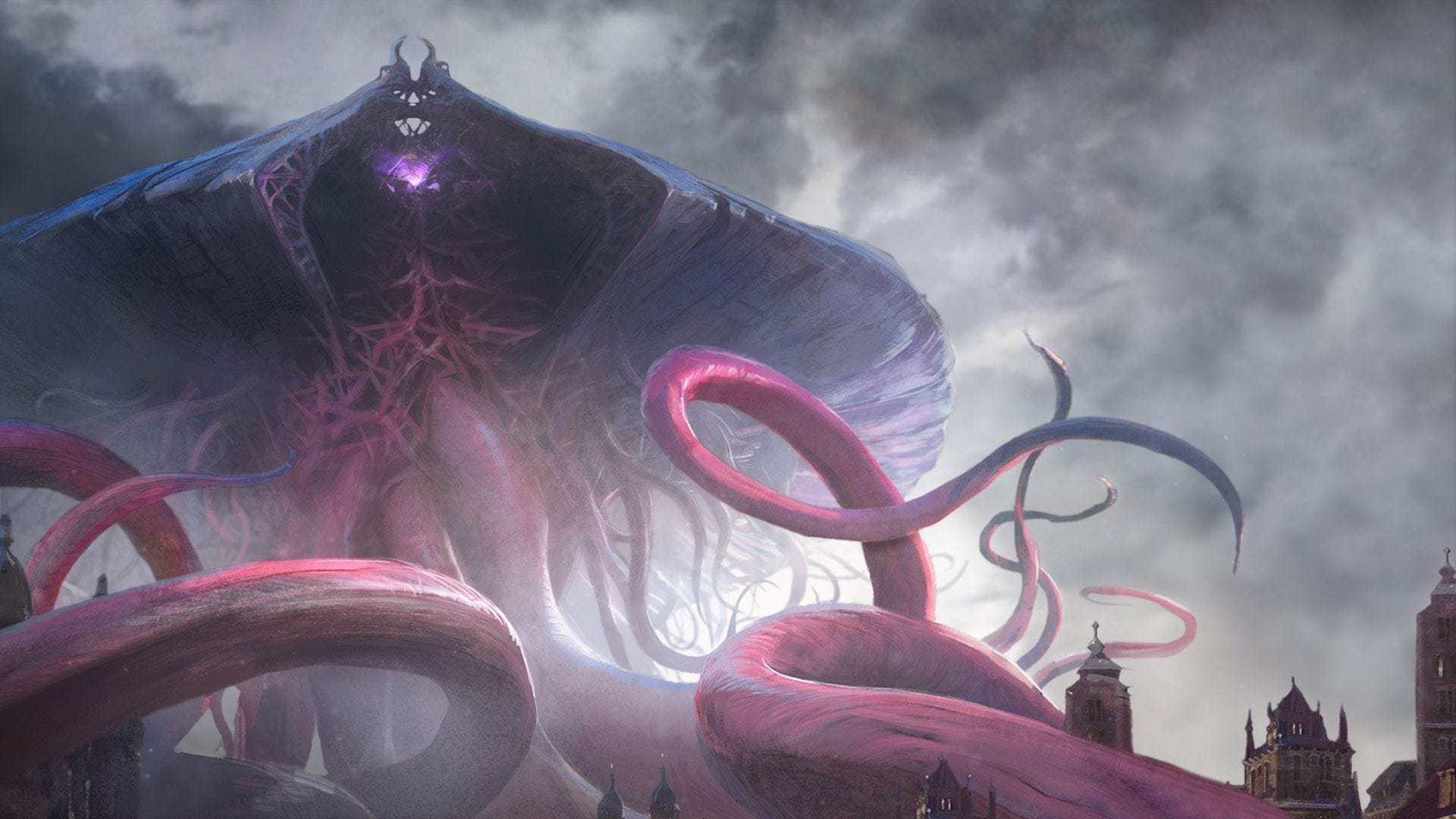
Think about that final sequence in 2001: A Space Odyssey. Dave Bowman, pulled through the stargate, watching time spiral into itself, then re-emerging as the Star Child—a being beyond form or comprehension. It’s not something you explain. It’s something you experience. I think the closest Magic has come to capturing that kind of existential awe was in the moment we first saw Emrakul descend on Innistrad in Eldritch Moon. That shot of the people distorting—flesh warped and writhing—was our monolith. It was our stargate. Suddenly, the story wasn’t about vampires or werewolves anymore. It was about a truth too massive, too alien, for the plane to survive. And the scariest part? Emrakul didn’t come to destroy Innistrad—she came to reshape it
Or take Solaris. The way Solaris doesn’t attack or invade but instead conjures physical echoes of your past—your grief, your guilt, your unresolved love—it hits somewhere deep. It’s intimate horror. It’s a kind of fear that says, “you’ll never escape yourself, no matter how far you travel.” That exact feeling? We’ve seen sparks of it in Magic too—especially with the Phyrexian storyline, but even more personally in March of the Machine: Aftermath. Think of Nissa waking up, changed. Think of Ajani, twisted and remade, forced to live with what he did while compleated. These are characters staring into the mirror Solaris holds up: not to see their reflection, but their regret.
Even Nicol Bolas’s defeat at the end of War of the Spark had a cosmic finality to it. Trapped in the Meditation Realm, cut off from the multiverse—not dead, not gone, just held. Like HAL 9000 being shut down piece by piece, singing “Daisy Bell” as it flickers out. These moments don’t yell. They echo. They linger
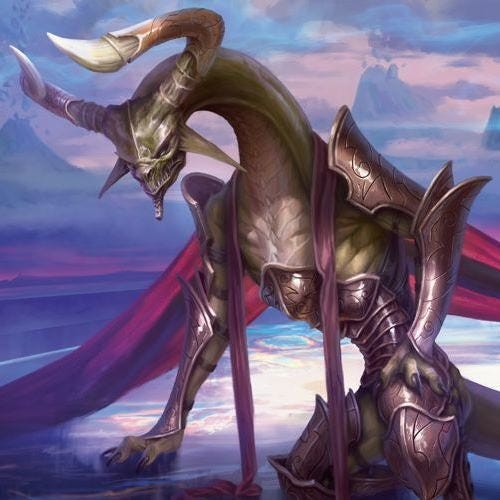
So when I think about what Edge of Eternities could be, I don’t just want another cool setting. I want those moments. I want to see a planeswalker step through some shimmering rift and come back… different. I want to crack a pack and pull a card that feels like it was torn from the veil between realities. A creature that doesn’t just deal damage—it whispers something ancient in flavor text that makes me pause. A land that taps for no known color of mana. An enchantment that enters with no explanation and leaves you wondering if it was ever real.
Let’s see mechanics that echo those feelings: cards that phase, flicker, recur unnaturally. Spells that copy themselves unexpectedly or replace themselves with stranger versions. What if drawing a card meant reaching into a timeline that never happened? What if instants could ripple across turns, or permanents grew stronger the further they drift from reality?
Because Magic has always been good at building worlds but sometimes, it builds moments. And those are what stick with us. Bolas rising over Amonkhet. The Gatewatch standing together, then falling apart. Sorin, buried alive in stone. Tamiyo’s journals, left behind as a whisper of who she was.
Edge of Eternities has the potential to give us new moments like those. Moments that don’t just tell us we’ve crossed into the unknown-but make us feel it in our bones.
Mechanics at the Edge: Using the Known to Touch the Unknown
If Edge of Eternities is going to truly capture the feeling of drifting toward something massive, ancient, and unknowable—the 2001 stargate, the sentient sea of Solaris, the godlike silence of Emrakul—it doesn’t need to invent brand-new mechanics. Magic already has the tools. The question is how we use them.
Let’s talk about mechanics that already exist, but that can be used to make us feel like the multiverse is cracking at the seams
Suspend — Time is Fragile
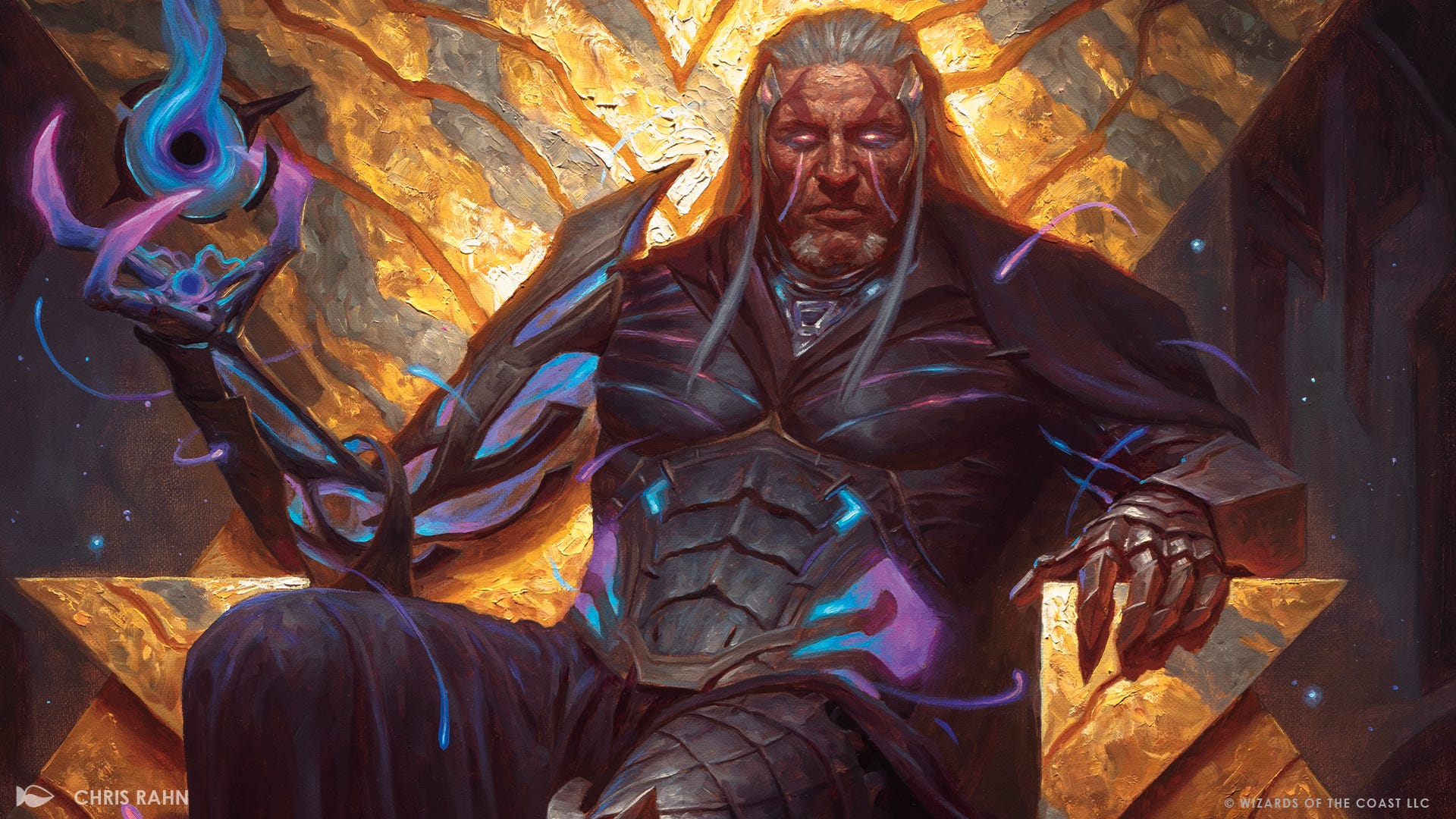
Suspend has always felt weird in the best way. You’re casting a spell that hasn’t happened yet. In a spacefaring, dimension-drifting set, Suspend becomes more than a gimmick—it’s a flavor win. You’re sending something into temporal orbit and watching it slowly fall back into reality.
Imagine a moment where you Suspend a creature—not because it’s too powerful to cast now, but because it can’t exist in this moment. Like you’re drawing it from a future that’s still being written.
Imagine a planeswalker with Suspend. A version of yourself that isn’t ready to appear until a few turns of instability pass. Or Suspend on instants, like warning signals echoing forward from the past.
Foretell — Predictions or Premonitions?
Foretell is functionally close to Suspend, but flavored as prophecy—what’s meant to happen. But what if Foretell, in a cosmic horror context, isn’t prophecy—it’s inevitability? You don’t choose to cast that foretold spell. You surrender to it.
A foretold wrath. A foretold transformation. A foretold moment where your hand empties and your graveyard speaks. In the right context, Foretell doesn’t feel clever—it feels doomed.
Madness — Broken Minds, Fractured Realities
This one writes itself. Madness isn’t just about value—it’s about losing control. It’s about being pushed to the edge, discarding things you thought were safe, and having them come back twisted. Solaris vibes all over.
Mechanically, it can enable self-disruption. But flavorfully? It’s the player breaking. The spark cracking. The deck whispering truths you weren’t ready to hear.
Flashback / Aftermath / Escape — Nothing Ever Really Leaves
The graveyard is where reality starts to slip. You think something is gone, and then it crawls back in a new form. Magic has always done this well, but in a set like Edge of Eternities, this recursion should feel cosmic—like time folding in on itself.
Flashback lets the past repeat. Aftermath is a narrative mechanic by design—an event and its consequence. And Escape? Escape is the stuff of space horror. A creature clawing back from the void. A spell that defies entropy.
Use these carefully, sparingly, and flavorfully—and suddenly, casting a spell becomes a violation of natural law.
Morph / Manifest — The Unseen Made Flesh
You want unknown? Morph and Manifest are literally creatures you don’t know. And in a set about exploring the outer edge of reality, that’s perfect.
Imagine manifesting the top of your library as a 2/2… but the flavor is that reality isn’t rendering properly. It’s not that you haven’t revealed it yet—it’s that you can’t comprehend it. Morph becomes like those alien signals in space: garbled, incomplete, terrifying.
And if something flips and becomes a godlike entity? That’s the moment of transformation—the 2001 Star Child, the Solaris ghost, the Emrakul moonrise.
Phasing / Vanishing / Flicker Effects — Reality Isn’t Stable
Let’s mess with presence.
Phasing is so underused—and so perfect here. Not tapped, not gone, just… unreachable. Phased things aren’t dead. They’re elsewhere.
Vanishing is just decay with a countdown. Perfect for the “drifting into entropy” feel. Or cards that exile themselves and return later—a callback to Flickerwisp, Ephemerate, Teleportal. Each time they come back a little less like what they were.
Use this to simulate spatial anomalies. Ships drifting in and out. Planeswalkers flickering across dimensions. Permanents that stop existing, not because they’re destroyed—but because they don’t belong here yet.
Magic has always walked the line between flavor and mechanics. But the great sets—Innistrad, Amonkhet, New Phyrexia, Zendikar—all succeeded because the mechanics made the theme feel real.
With Edge of Eternities, we don’t need an alien ruleset to feel like we’re adrift in the multiverse. We just need to see the right tools used with care. Suspend and Foretell as echoes of time. Madness and Escape as distortions of self. Morph and Phasing as gaps in comprehension. These are cards that play the way a cosmic story reads.
In the end, I don’t want to understand everything in this set. I want to be overwhelmed. I want to be small. I want to feel, even for a moment, like I’m drawing a card from the other side of the stars.
Gazing Into the Beyond
When we talk about the edges of the universe—whether in Clarke’s monoliths, Lem’s haunted ocean, or the ever-shifting contours of the Multiverse—we’re really talking about the boundary between comprehension and wonder. And Magic: The Gathering, at its best, has always thrived at that edge
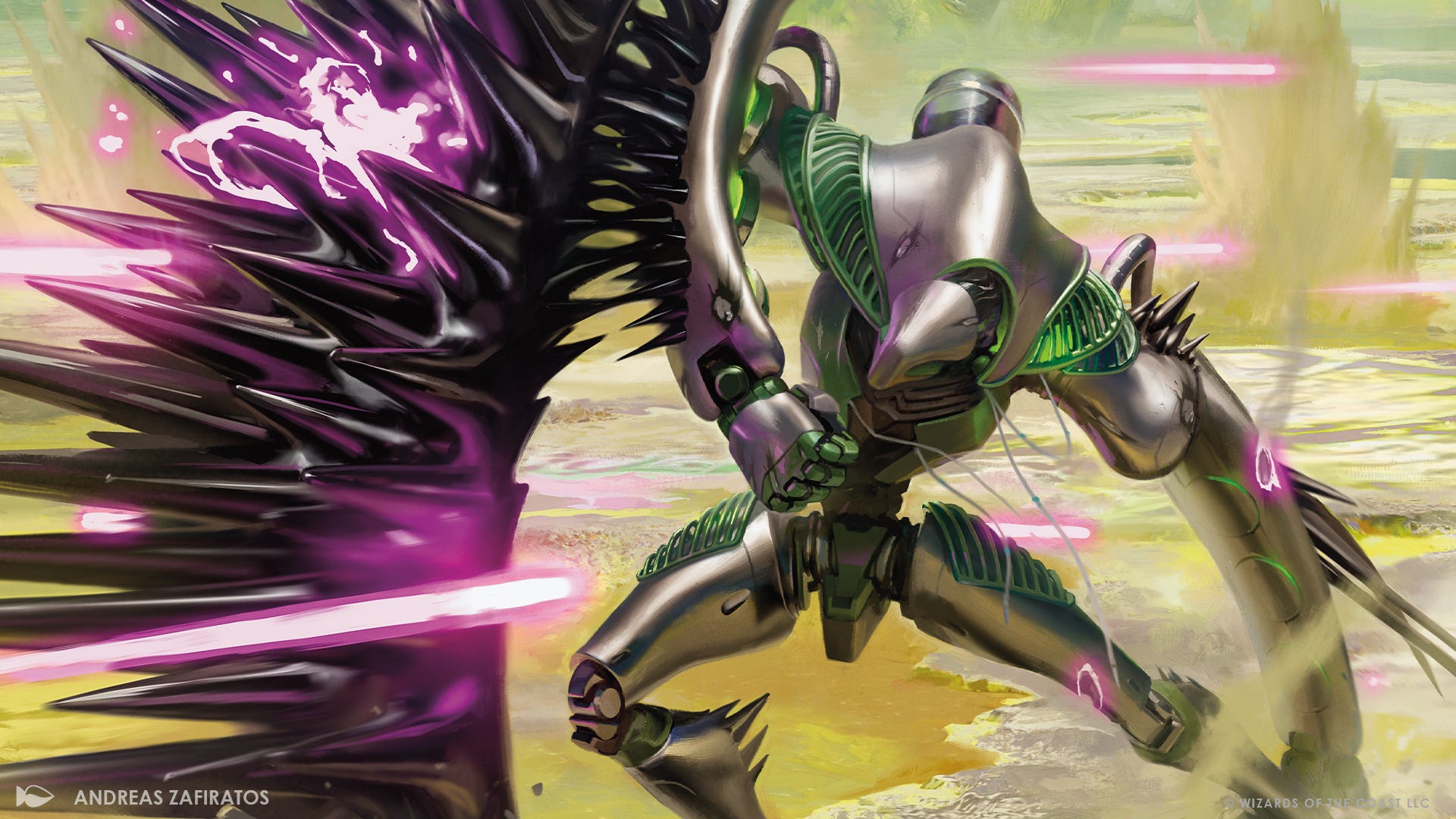
Edge of Eternities doesn’t need to reinvent the wheel to feel groundbreaking. It just needs to take what we already know and push it out into the void—make us see old mechanics through new stars, feel familiar gameplay with alien gravity. When madness feels like loss of control, when Foretell feels like fate knocking louder each turn, when a simple face-down creature holds the unknowable behind its mask—that’s where gameplay becomes emotion.
We’ve seen Magic terrify us (New Phyrexia), enchant us (Eldraine), and ground us in myth (Theros). But maybe now, it’s time for it to unmoor us. To show us how small we are in the face of something vast. Something beautiful. Something not meant to be touched.
So what do you think?
What mechanics would make you feel like you’ve stepped off the edge of a known plane and into the open stars? What kinds of cards—flavor-wise, mechanically, even visually—would leave you awestruck, uncertain, or a little afraid?
Let’s speculate together. Let’s imagine a set that dares to go further. Because the edge of the universe is closer than we think—and Magic might just be ready to take us there.
 The Ravnican Reading Nook
Leave a comment